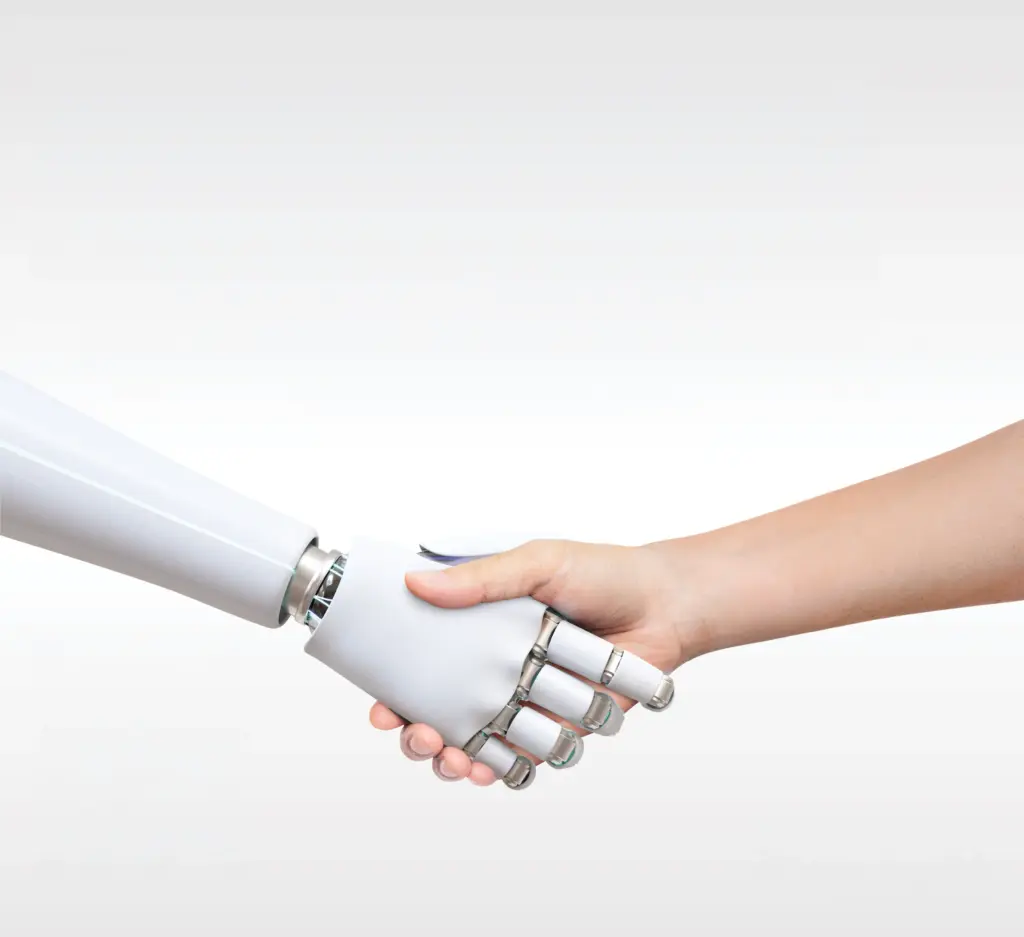
How AI Is Reshaping The Workplace
Artificial Intelligence (AI) is reshaping the way we work. And honestly, it's happening faster than we can keep up.
From virtual assistants like Siri and Alexa to LLMs like ChatGPT and Gemini, AI has taken over our lives - and the workplace.
In fact, McKinsey reports that 88% of the organizations surveyed are now regularly using AI in at least one business function. CFO backs this up by saying that 72% of business leaders believe that they can improve employee productivity with AI implementation.
But where and how is AI making an impact? Keep on reading this blog to know more.
No. #1: Recruiting
Let's start from where it all begins for an employee: Recruitment. Hiring is one of the biggest areas where AI has made an impact. Many large organizations now use artificial intelligence to support their process.
There are AI tools that help companies find suitable candidates by evaluating skills and performance indicators. Not just that, but artificial intelligence also helps screen out the "good candidates" from a pile of thousands of applicants.
This certainly saves up the recruiter's time and efforts. The process also helps in avoiding any kind of human error and bias like race, gender or religious affiliation.
Olivia by Paradox is one such example. It is an AI recruitment assistant that helps companies screen candidates, manage applications, and answer basic queries.
Tools like Olivia aren't meant to replace recruiters. They are meant to support them. By handling repetitive tasks, AI allows human teams to focus on what really matters: making core decisions, conversing with the candidates to assess the profile and building strategies.
No. #2: Training and Development
Artificial intelligence also plays a major role in employee training and development.
AI tools are first trained to analyze how employees perform different tasks. Once they understand the workflow, they then help train both new and existing employees to perform those tasks more efficiently.
This way companies can save up on ample of wasted time and resources by giving training to hundreds of employees, without having to hire trainers every time.
AI can also assess an individual employee and determine what specific skills they might need to further refine their expertise. Consequently, each employee would get a training program tailored to their needs.
AI coaching tools like Cogito and Chorus even offer guidance during calls and chats, especially for customer service roles. For employees in this field, it can be incredibly helpful to converse with the customers easily.
No. #3: Work Productivity Management
This is another area where artificial intelligence has made its mark. There are so many different tools for so many different tasks like Asana for product management, Notion and Evernote for note-taking, Zoom and Slack for communication, etc.
AI is being integrated in these tools to handle simple, repetitive tasks to free up employees so they can focus on more productive things.
No. #4: Improved Cybersecurity
Because artificial intelligence is fast, accurate, and efficient, it has become especially valuable in cybersecurity.
Companies now use AI to detect potential threats. Unfortunately, that is something humans simply can't compete with robots at the same level or speed. Fortunately, we don't have to.
We can use artificial intelligence systems to monitor activity, analyze patterns, respond to threats, and even eliminate risks before they cause serious damage.
AI tools like Exabeam and DeepArmor help prevent malware attacks, detect security breaches, and instantly alert security teams so further action can be taken. In a digital-first world, this level of protection has become really important.
No. #5: Marketing & Personalization
The marketing landscape has changed dramatically with the rise of AI. Previously, businesses used to show the same ad to all the customers on the same platform.
However since the rise of artificial intelligence, brands have the ability to create and show personalized ads to their target audience.
Take Netflix, for example. Behind every, "our Next Watch" is an AI system analyzing and browsing customer behaviour behind the scenes. From tailoring email campaigns to recommending products/services, AI helps brands connect with their customers on an individual level.
No. #6: Supply Chain
The supply chain is another area where AI is being used to do a lot of heavy lifting behind the scenes.
We can use AI tools to predict demand and manage inventory. Instead of just making wild guesses, businesses can use artificial intelligence to analyze past data, seasonal trends, and customer behavior to forecast what products are needed, when they would be needed, and in what quantity.
This reduces common issues like overstocking, delays, or running out of products at the worst possible time.
AI is also used to optimize delivery routes, track shipments, and flag potential disruptions before they can become major issues. This helps companies save time, cut costs and deliver products more efficiently.
No. #7: Customer Service
Artificial intelligence has transformed the customer service area. We have chatbots, virtual agents and AI-assistants that now handle common customer queries like FAQs and order status.
There are multiple reasons for this. AI is available 24/7. It can send a thousand messages in a second. The best part? It doesn't feel tired doing the same repetitive task every day.
Does that mean humans are no longer needed in the customer service area? The answer is no. Oftentimes, you have to improvise during the conversation, or bring in the big guns (emotional intelligence) to deal with customers. AI can't compete with humans on this.
That's why customer support is still a huge industry for people to get a job in. If you are looking to become a customer representative, join ibex. Pakistan and represent global brands with confidence and style.
Interested In Building A Career At ibex.?
Don't wait Apply Now!
View Our Job Openings
What Does The Future Look Like?
While AI has already made its mark in multiple business functions, we've only scratched the surface. In the future, artificial intelligence is expected to play an even bigger role across industries.
If AI can be fine-tuned to think strategically and respond empathetically, it can be used for mental health support and even in leadership development.
Will it replace humans, though? That's still left to see. If you are interested in learning more about this topic, read our blog Should We Be Worried About AI?